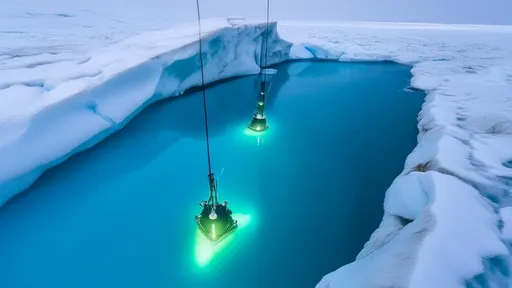
The icy surface of Antarctica has long concealed one of the planet's most enigmatic hydrological systems. Recent advancements in ice-penetrating sonar technology have unveiled a sprawling network of liquid waterways beneath the continent's massive ice sheets, challenging previous assumptions about the frozen landscape. These subglacial rivers, some stretching hundreds of kilometers, flow between bedrock and ice in complete darkness, creating a dynamic environment that influences ice sheet movement and potentially harbors unique microbial life.
An international team of glaciologists has spent three field seasons towing advanced radar systems across East Antarctica's remote regions. Their findings, published in Nature Geoscience, reveal interconnected waterways covering an area comparable to Western Europe. "We're not just talking about isolated pockets of meltwater," explains lead researcher Dr. Eleanor Voss. "This is an extensive, actively flowing system that redistributes water across continental scales beneath kilometers of ice."
The discovery fundamentally alters our understanding of Antarctic hydrology. Where scientists once imagined slow-moving films of meltwater, they now confront rushing rivers and subglacial lakes that fill and drain catastrophically. Some channels measure over 500 meters wide and show evidence of periodic flooding events. These watercourses appear to follow ancient geological troughs buried beneath the ice for millions of years, suggesting the system predates modern glaciation.
Technological breakthroughs made this mapping possible. New dual-frequency radar arrays can distinguish between stagnant and flowing water by detecting subtle Doppler shifts in the return signal. The team supplemented airborne surveys with ground-based seismic sensors that "listen" to water movement through vibrations in the ice. This multi-method approach revealed surprising complexity - including waterfalls where subglacial rivers cascade over bedrock cliffs, and "pressure gates" where ice thickness variations control water flow directions.
Climate implications loom large in the research. Subglacial water acts as a lubricant between ice and bedrock, accelerating glacial movement toward the ocean. As atmospheric warming penetrates deeper into the ice sheet, increased basal melting could expand these hydrological networks. "We've identified regions where small changes in water input lead to disproportionate increases in ice flow velocity," notes co-author Professor Mikhail Petrov. "This nonlinear response makes sea level rise projections particularly challenging."
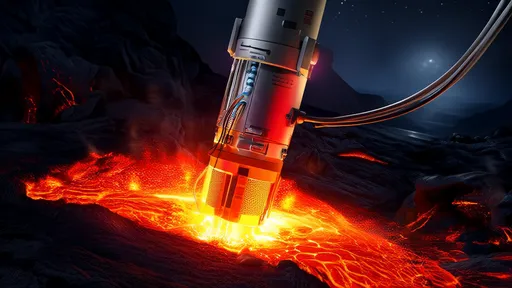
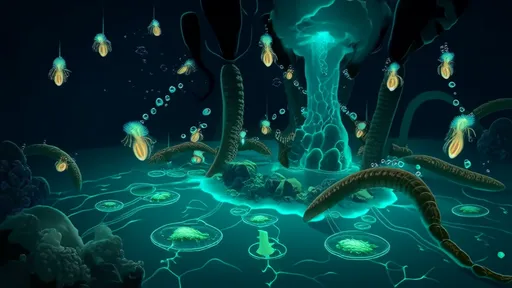
The biological ramifications may prove equally significant. Samples collected from subglacial discharge points contain diverse microbial communities thriving without sunlight. These extremophiles metabolize minerals crushed from bedrock, potentially offering clues about life on icy moons like Europa. Dr. Voss's team plans future expeditions with sterilized drilling equipment to sample the rivers directly, avoiding contamination from surface microbes.
Logistical hurdles remain immense. The most extensive river networks lie beneath Dome A, Antarctica's most remote region where winter temperatures plunge below -80°C. Equipment must withstand these extremes while operating autonomously for months. "We're essentially doing oceanography," quips field engineer Carlos Mendez, "except our 'ocean' sits under 3 kilometers of ice, and mistakes mean losing million-dollar equipment to permanent entombment."
As data accumulates, surprising patterns emerge. Some rivers reverse flow seasonally, while others appear remarkably stable over decadal timescales. A particularly massive conduit beneath Recovery Glacier transports an estimated 250 cubic meters per second - comparable to Europe's Rhine River during summer. These discoveries prompt reevaluation of how Antarctica's interior responds to climate variations, with potential implications for global ocean circulation patterns.
The research also informs planetary science. Jupiter's moon Europa and Saturn's Enceladus likely harbor similar ice-covered oceans, and Antarctica's subglacial environment provides the closest terrestrial analog. NASA has partnered with the team to test prototype instruments for future ice-penetrating missions. "If life exists in Europa's dark ocean," speculates astrobiologist Dr. Susan Choi, "it might resemble what we're finding beneath Antarctica right now."
Ongoing studies focus on temporal variability. By comparing new surveys with archival data from the 1990s, researchers detected significant network expansion in West Antarctica, where warming has been most pronounced. Meanwhile, East Antarctica's systems show remarkable stability - for now. "These rivers have flowed unseen for millennia," reflects Dr. Voss. "Our challenge is understanding how they'll change in the coming decades, and what that means for all of us."
As the international scientific community digests these findings, one truth becomes clear: Antarctica's secrets extend far below its frozen surface. The continent's hidden waterways represent both a crucial climate variable and a biological frontier, their exploration pushing technological limits while rewriting polar science fundamentals. Future discoveries in this lightless realm may well redefine our understanding of Earth's most remote wilderness.

By /Aug 14, 2025

By /Aug 14, 2025
By /Aug 14, 2025
By /Aug 14, 2025
By /Aug 14, 2025
By /Aug 14, 2025
By /Aug 14, 2025
By /Aug 14, 2025
By /Aug 14, 2025
By /Aug 14, 2025
By /Aug 14, 2025
By /Aug 14, 2025
By /Aug 14, 2025

By /Aug 14, 2025

By /Aug 14, 2025

By /Aug 14, 2025
By /Aug 14, 2025

By /Aug 14, 2025
By /Aug 14, 2025
By /Aug 14, 2025
