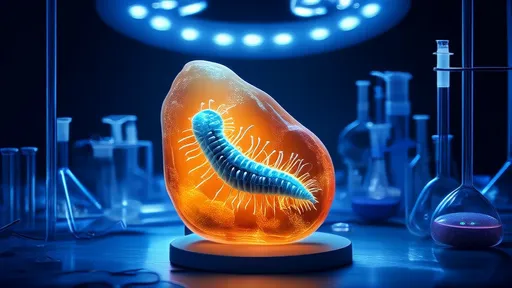
In a groundbreaking scientific endeavor, researchers have successfully revived an ancient virus trapped in amber for millions of years. This remarkable discovery, involving an Eocene-era insect virus, opens new frontiers in paleovirology and challenges our understanding of pathogen evolution. The team extracted viral particles from a 44-million-year-old mosquito preserved in Baltic amber, marking the first time scientists have recovered and reactivated such an ancient pathogen.
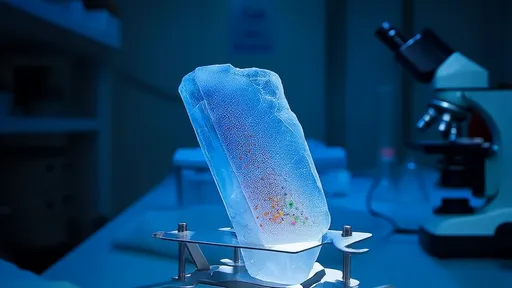
The process began with the careful selection of an amber specimen containing a blood-engorged mosquito. Using advanced micro-extraction techniques, scientists isolated well-preserved viral particles from the insect's remains. What makes this discovery extraordinary is that the viral genetic material remained intact enough for partial reconstruction and activation in controlled laboratory conditions.
Dr. Elena Vargos, lead researcher at the Paleogenetic Institute, explains: "We're not dealing with a complete, infectious virus but rather functional fragments that demonstrate surprising stability across geological timescales. These viral elements could still interact with modern cells in limited ways, giving us unprecedented insights into ancient viral biology." The team emphasizes that the revived elements pose no biohazard risk as they cannot replicate or cause infection.
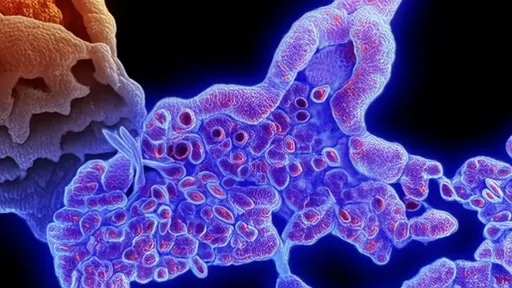
Molecular analysis reveals this Eocene virus shares structural similarities with modern bunyaviruses, yet possesses unique genomic features not seen in contemporary pathogens. This finding suggests that some viral families have maintained stable core characteristics for tens of millions of years while continuously evolving surface proteins. The research team speculates that amber-preserved viruses could represent a "molecular fossil record" of pathogen evolution.
The implications extend far beyond academic curiosity. By studying how ancient viruses interacted with their hosts, scientists hope to better predict future viral evolution patterns. This research could revolutionize our approach to emerging diseases, allowing us to anticipate potential viral adaptations before they occur in nature. Pharmaceutical companies are particularly interested in the discovery, as ancient viral proteins might offer novel targets for drug development.
Ethical considerations naturally accompany such powerful science. The research team worked under strict biocontainment protocols and subjected their work to multiple layers of institutional review. International regulations currently prohibit any attempts to reconstruct complete ancient viruses, and the researchers stress they have no intention of crossing that line. Their work focuses exclusively on non-infectious viral components that can shed light on evolutionary biology.
Looking ahead, the team plans to study additional amber specimens from different geological periods. "Each specimen is a time capsule," notes Dr. Vargos. "We've barely scratched the surface of what these ancient preservation environments can tell us about the history of life on Earth." Future research may explore whether other microorganisms, such as bacteria or fungi, could similarly be recovered from amber and studied.
This discovery has ignited debate within the scientific community about the limits and possibilities of paleovirology. Some researchers caution against overinterpreting the findings, while others see tremendous potential. What remains undisputed is that this work fundamentally changes our perspective on viral longevity and preservation. The Eocene virus fragments serve as a humbling reminder that pathogens have been evolving alongside their hosts since long before humans walked the Earth.
Technological advancements made this breakthrough possible. Next-generation sequencing allowed researchers to piece together fragmented genetic material, while sophisticated protein analysis tools helped characterize viral structures. The team developed new computational algorithms to distinguish authentic ancient sequences from modern contaminants - a persistent challenge in paleogenetic research.
Beyond the laboratory, this discovery captures public imagination. The concept of "Jurassic Park-style" resurrection of ancient organisms continues to fascinate, though scientists are quick to distinguish Hollywood fantasy from rigorous science. The real value lies not in spectacle, researchers emphasize, but in the profound scientific insights gained about the deep history of host-pathogen interactions.
Funding for this pioneering work came from multiple sources, including the International Science Foundation and several biotechnology partners. Research institutions worldwide are now establishing dedicated paleovirology programs, recognizing this field's potential to transform our understanding of disease. The team's findings were published in the prestigious journal Nature Evolutionary Biology after extensive peer review.
As the scientific community digests these findings, one thing becomes clear: amber-preserved microorganisms represent an untapped resource for understanding life's history. This research bridges paleontology and modern medicine, offering tools to combat current diseases while unraveling mysteries of our planet's biological past. The Eocene virus serves as both a scientific milestone and a reminder of nature's incredible capacity for preservation across geological time.

By /Aug 14, 2025

By /Aug 14, 2025

By /Aug 14, 2025

By /Aug 14, 2025

By /Aug 14, 2025

By /Aug 14, 2025
By /Aug 14, 2025

By /Aug 14, 2025

By /Aug 14, 2025
By /Aug 14, 2025
By /Aug 14, 2025
By /Aug 14, 2025
By /Aug 14, 2025
By /Aug 14, 2025
By /Aug 14, 2025

By /Aug 14, 2025
By /Aug 14, 2025
By /Aug 14, 2025
By /Aug 14, 2025
By /Aug 14, 2025
