The rapid spread of infectious diseases has long been a subject of intense scientific scrutiny, but the COVID-19 pandemic brought into sharp focus the critical role of human interactions in disease transmission. Among the most promising tools for understanding these dynamics are mathematical models that simulate how diseases propagate through social networks. These models, often rooted in graph theory and network science, provide a framework for predicting outbreak trajectories and evaluating the efficacy of various intervention strategies.
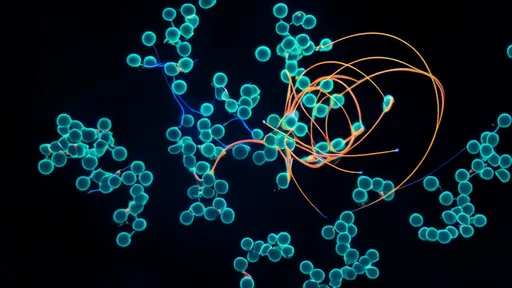
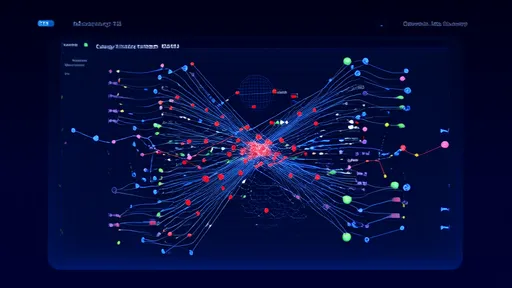
At the heart of these models lies the concept of the social network topology—a mathematical representation of how individuals are connected within a population. Unlike traditional epidemiological models that assume homogeneous mixing, network-based approaches account for the heterogeneity of human contacts. Some individuals, known as "super-spreaders," have disproportionately large numbers of connections, while others interact with only a few. This variation can dramatically alter the course of an outbreak, making network topology an essential factor in accurate disease modeling.
Recent advances in computational power and data availability have enabled researchers to construct increasingly sophisticated network models. By incorporating real-world data on mobility patterns, social media interactions, and even Bluetooth-based contact tracing, these models can simulate disease spread with remarkable precision. For instance, during the COVID-19 pandemic, researchers used mobile phone data to map population movements and predict hotspots of transmission. Such approaches have proven invaluable for policymakers seeking to implement targeted lockdowns or other containment measures.
One of the key insights from network-based models is the importance of community structure in disease spread. Social networks are rarely random; instead, they often consist of tightly knit clusters with fewer connections between them. This modularity can slow the spread of a disease, as outbreaks may remain confined to specific communities before bridging to others. However, once a disease breaches these boundaries, the consequences can be severe. Understanding these dynamics helps explain why certain regions experience delayed but explosive outbreaks, even after initial containment efforts appear successful.
The interplay between network structure and individual behavior adds another layer of complexity to these models. As awareness of an outbreak grows, people naturally alter their social interactions—reducing contacts, wearing masks, or avoiding crowded spaces. These behavioral changes effectively rewire the social network, creating a feedback loop between disease spread and human response. Capturing this dynamic requires models that can adapt in real-time, incorporating not just the static structure of social connections but also how those connections evolve under the stress of an epidemic.
Looking ahead, researchers are exploring how network models can inform vaccination strategies. Traditional approaches often prioritize vaccinating the most vulnerable populations, but network theory suggests that targeting highly connected individuals—the social hubs of a community—might be more effective at curbing transmission. This strategy, known as "acquaintance immunization," leverages the uneven distribution of connections in real-world networks to maximize the impact of limited vaccine supplies. Early simulations indicate that such targeted approaches could significantly reduce the herd immunity threshold needed to control an outbreak.
Despite their promise, network-based models face significant challenges. Data privacy concerns limit access to detailed social interaction records, while the computational complexity of large-scale networks strains even modern supercomputers. Moreover, the unpredictable nature of human behavior introduces uncertainties that no model can fully capture. Yet, as the field continues to evolve, these tools are becoming increasingly indispensable for pandemic preparedness and response.
The COVID-19 pandemic has underscored the limitations of traditional epidemiological models and highlighted the need for approaches that account for the intricate web of human relationships. Social network topology models represent a powerful frontier in this effort, offering insights that could shape public health strategies for decades to come. As researchers refine these tools and integrate them with emerging technologies like artificial intelligence and real-time data streams, we move closer to a future where disease outbreaks can be predicted, contained, and ultimately prevented with unprecedented precision.

By /Aug 14, 2025

By /Aug 14, 2025

By /Aug 14, 2025

By /Aug 14, 2025

By /Aug 14, 2025

By /Aug 14, 2025

By /Aug 14, 2025

By /Aug 14, 2025

By /Aug 14, 2025

By /Aug 14, 2025
By /Aug 14, 2025

By /Aug 14, 2025

By /Aug 14, 2025

By /Aug 14, 2025

By /Aug 14, 2025
By /Aug 14, 2025
By /Aug 14, 2025

By /Aug 14, 2025

By /Aug 14, 2025

By /Aug 14, 2025
